
TLDR: For Leatherland belts using the size chart below, follow the product's end-of-buckle measurement method. Measure a belt that fits from the specified buckle point to the hole you actually use, then compare that distance with the chart. Aim for a new belt that fastens near its middle hole. If you are between sizes, check the available adjustment range rather than automatically sizing up.
Choosing the right belt size starts with knowing what to measure. Guessing from trouser size can give you a starting point, but brands and products may use different sizing methods.
Measure using the method specified for your chosen belt, then compare the result with its product size guide. This helps you choose a belt that fastens comfortably and leaves room for adjustment.
Use a belt that fits comfortably with the clothing you plan to wear. Follow the same measurement starting point as the size chart for your chosen Leatherland belt.
If you normally use the middle hole, measure to that hole. If you use another hole, measure to that one instead. The aim is to reproduce your comfortable fit near the middle hole of the new belt.
Do not measure the full strap to its tip or switch to a buckle-prong measurement unless the product instructions specify that method. If the starting point is unclear, ask Leatherland to confirm the measurement point before ordering.
If you do not have a belt to measure, use a soft measuring tape around your waist where you normally wear your belt.
Measure over the clothing you usually wear with that belt. For example, measure over jeans if the belt is for jeans, or over dress trousers if it is for workwear.
Keep the tape firm but not tight. Treat this as a fit reference and check the product's instructions before choosing a labelled size. A waist measurement and a flat buckle-to-hole measurement are not automatically interchangeable.
The Leatherland chart lists the following approximate measurements from the specified end of the buckle to the middle hole. Use it for products displaying this chart, and follow any different instructions on the individual product page.
| Labelled belt size | Approximate end-of-buckle-to-middle-hole measurement |
|---|---|
| 32 inches | 82 cm |
| 34 inches | 87 cm |
| 36 inches | 92 cm |
| 38 inches | 97 cm |
| 40 inches | 102 cm |
| 42 inches | 107 cm |
| 44 inches | 112 cm |
| 46 inches | 117 cm |
| 48 inches | 122 cm |
These are the supplied chart's approximate size references, not exact inch-to-centimetre conversions. Check available sizes on the product page; not every belt is offered in every size.
If your measurement falls between two labelled sizes, compare the usable hole range for both options. Choose the belt that accommodates your measurement with room to tighten and loosen.
Do not assume a larger size will always fit better. If only the middle-hole measurement is supplied and you are unsure about the adjustment range, contact Leatherland before ordering.
Different belt styles can fit differently even when marked with the same size.
For tailored trousers and office outfits, browse our men's leather dress belts. For jeans and chinos, compare our casual leather belts.
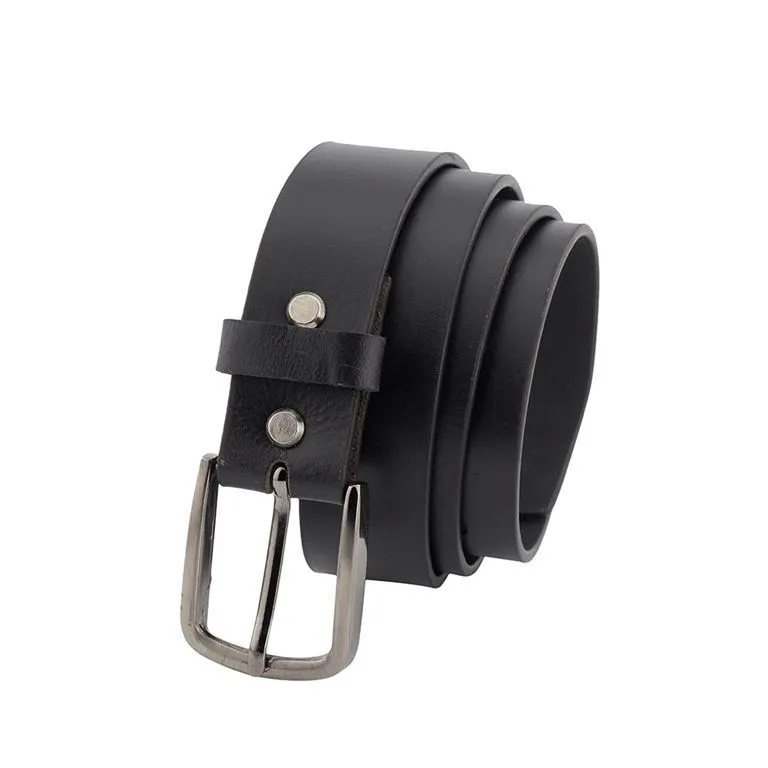
Once you know your size, compare the leather, width, buckle and finish with the clothing you wear most often.
Full-grain describes leather that retains its grain surface; it is also genuine leather. Leatherland's belts are made from full-grain buffalo leather. Browse our full-grain leather belts and compare the listed widths, finishes and buckles.
Check the width of your belt loops before ordering. A belt should pass through them easily and sit comfortably with the trousers you plan to wear.
A narrower, understated design may suit tailored trousers, while a more substantial buckle or textured finish may suit denim. Check the individual product dimensions rather than choosing by the style name alone.
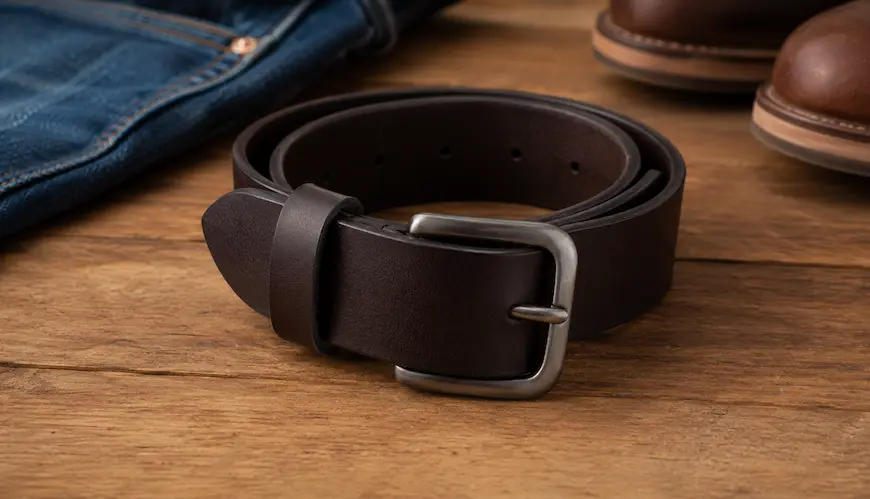
Browse our black leather belts to coordinate with black footwear, or compare brown tones for denim and earth-coloured outfits.
If you want two wearable sides in one belt, explore our reversible leather belts. Check the colours, width and buckle attachment as well as the sizing. To reverse Leatherland's detachable-buckle design, remove and reattach the buckle with the other side facing outwards, following the product instructions.
Once you know your size, browse Leatherland's men's leather belts and compare available sizes, colours, widths and buckle styles.
A trouser label does not confirm which belt size will fit. Adding two inches is a rough shopping guide, but it should not replace the product's measurement instructions.
A belt should ideally fasten near the middle hole. On the five-hole layout shown in Leatherland's sizing chart, the hole nearest the buckle gives the tightest fit, while the hole nearest the strap tip gives the loosest fit.
If you need the nearest-buckle hole, the belt may be larger than ideal. If you need the hole nearest the tip, it may be smaller than ideal. Middle-hole fit leaves adjustment in both directions.
Clothing and comfort can change how tightly you wear a belt. Avoid choosing a size that only fits at the tightest or loosest setting if another size provides a more useful adjustment range.
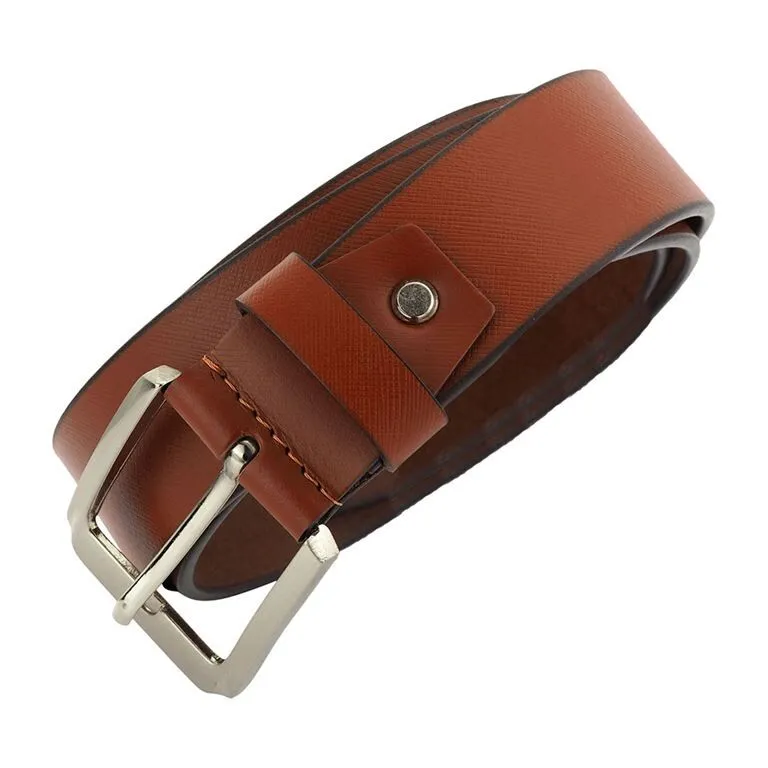
Check the measurement starting point, labelled sizes and any fit notes. Compare them with your measurement before ordering.
A total strap length is different from a buckle-to-middle-hole measurement. Make sure you are comparing the same measurement rather than assuming every listed length describes fit.
For reversible or detachable-buckle designs, follow the product's attachment and sizing instructions.
Compare the product's labelled size, measurement method and usable hole range. Choose the option that fits with adjustment available in both directions, rather than automatically sizing up or down.
For a Leatherland belt, use the buckle starting point specified by the product chart and measure to the hole you comfortably wear on an existing belt. Compare the result with the new belt's middle-hole measurement.
If you only have a waist or trouser measurement, follow the product instructions or ask for sizing help. Once you have checked the fit, explore the men's leather belt collection to choose your preferred style.
A labelled belt size is not directly interchangeable with a waist measurement. Follow the product's measurement method and choose a size that fits with room to adjust in both directions.
Adding two inches is a rough shopping guide, not a guaranteed fit. For a Leatherland belt, compare a well-fitting belt measured using the product's specified buckle point with its size chart.
There is no single size that suits everyone. Choose from your measurements and the product's chart rather than a presumed common size.
Leather can soften and change shape with wear. Choose a comfortable fit from the start rather than buying a tight belt and relying on it stretching.
Your trouser label or existing belt label can provide a starting point, but neither confirms fit across different sizing methods. Measure a belt that fits or contact Leatherland for help before ordering.
Not always. Labelled sizes and measurement methods can differ between products. Check the size chart and available adjustment range for each belt.

Add your favourites to cart

Select Afterpay at checkout
Log into or create your Afterpay account, with instant approval decision
Your purchase will be split into 4 payments, payable every 2 weeks
All you need to apply is to have a debit or credit card, to be over 18 years of age, and to be a resident of country offering Afterpay
Late fees and additional eligibility criteria apply. The first payment may be due at the time of purchase
For complete terms visit afterpay.com/terms