
TLDR: Choose a card holder if you mainly carry essential cards and ID, rarely use cash, and want the least pocket bulk. Choose a wallet if you regularly carry notes, coins, receipts, several cards, or more than one form of ID. If you fall between the two, a slim wallet or card wallet gives you extra flexibility without moving to a large wallet.
The card holder vs wallet decision comes down to what you carry and how often you use it. A card holder is the better fit for a small set of essential cards. A wallet makes more sense when cash, receipts, coins, work cards, loyalty cards, or extra identification are part of your normal day.
Leatherland sells both compact card holders and practical leather wallets because there is no single best option for everyone. The right choice depends on your daily routine, pocket comfort, storage needs, and whether RFID protection matters to you.
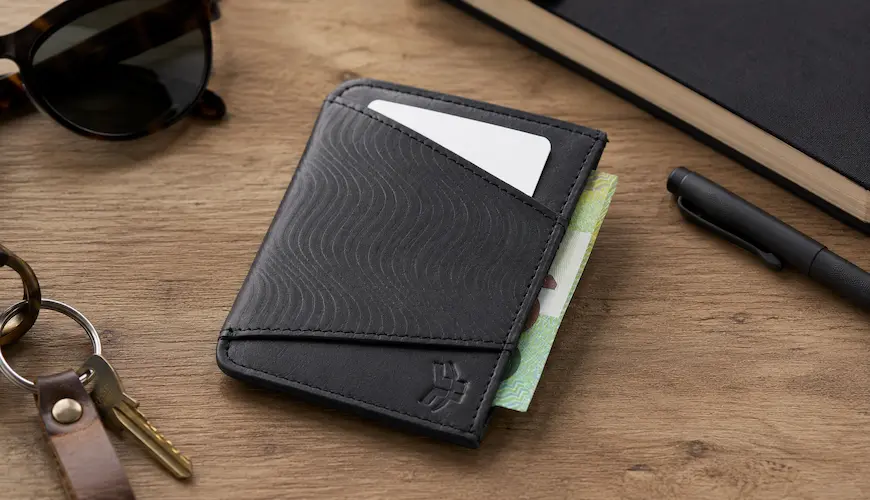
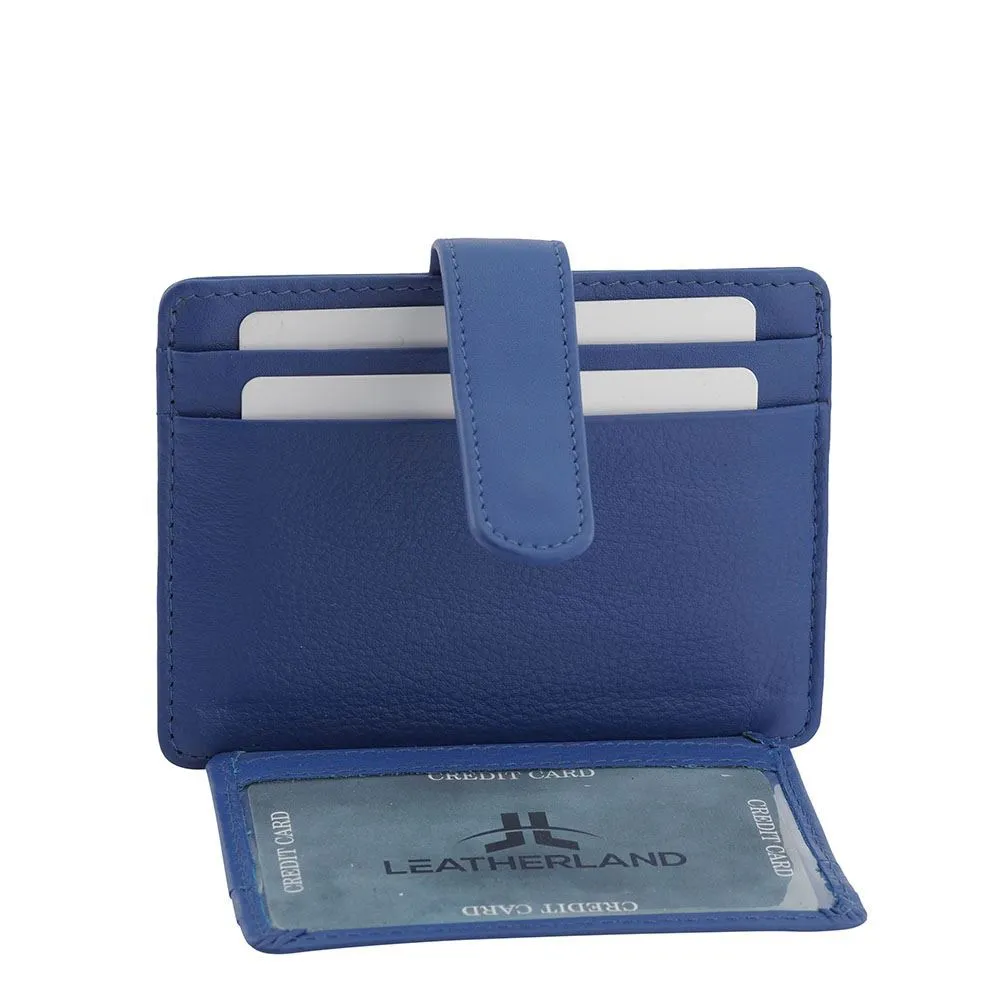
A card holder is a compact everyday carry accessory designed mainly for payment cards and ID. Some designs also have a centre pocket or slot for a small amount of folded cash.
Compared with a full-size wallet, a card holder is slimmer, lighter, and easier to carry in a front pocket, jacket pocket, or small bag. It is made for people who want quick access to essential cards without carrying extra bulk.
Common card holder features include:
A card holder is usually the better choice if you rely mostly on cards and digital payments, and do not want a thick wallet in your pocket.
A card wallet sits between a basic card holder and a traditional wallet. It keeps a card-focused shape but may add a note pocket, zip section, ID window, or extra storage. Check the individual product layout rather than relying on the name alone.
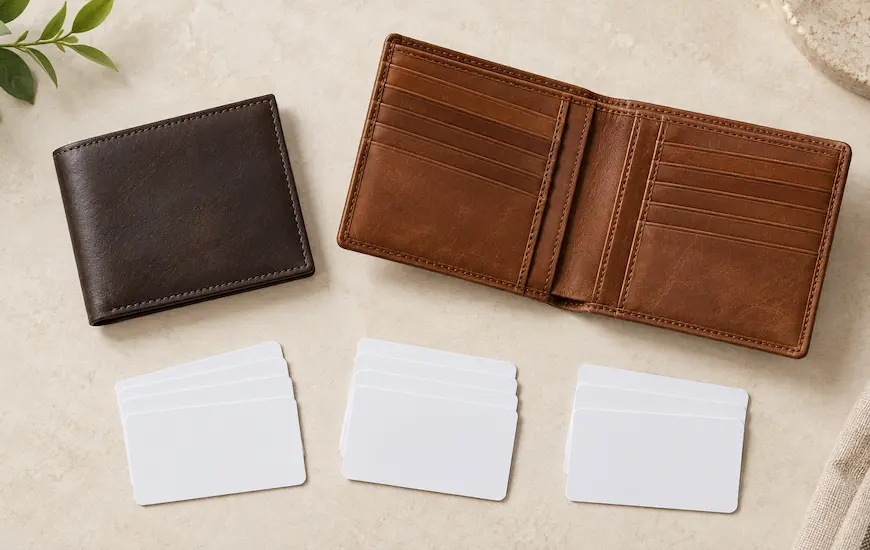
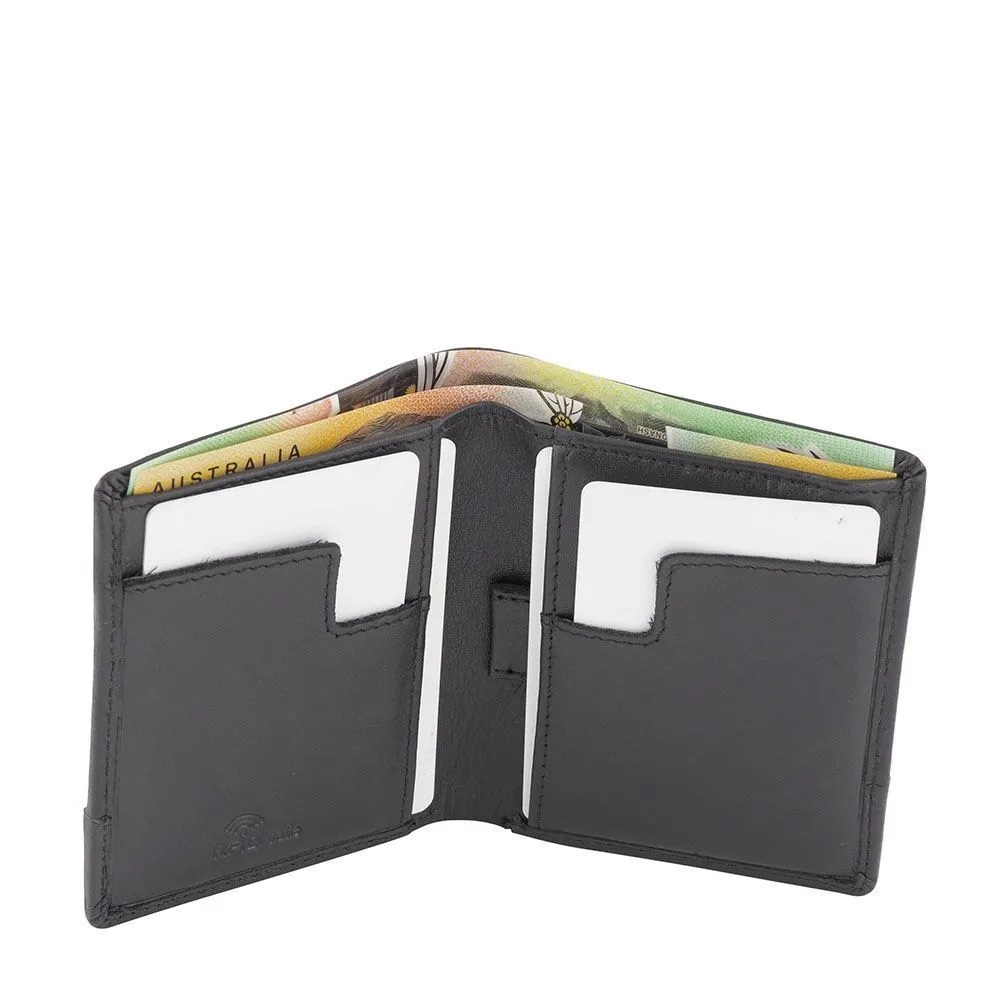
A wallet is a more versatile everyday carry option. It is designed to hold cards, cash, receipts, ID, and sometimes coins or extra documents depending on the layout.
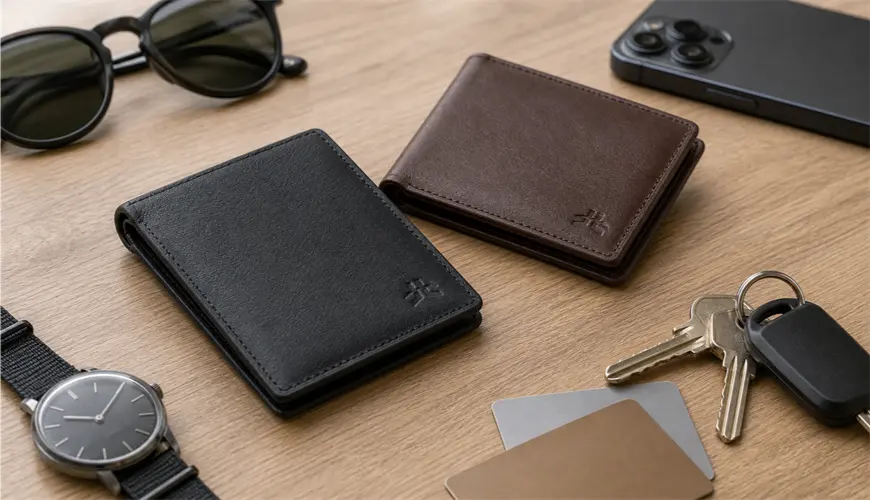
Traditional wallets usually offer more compartments than card holders. They can come in different formats, including bifold wallets, trifold wallets, zip-around wallets, high-capacity wallets, and men's slim wallets.
A wallet is usually the better choice if you carry more than a few cards, still use cash, keep receipts, or want one place for everything.
Both options can work well. The difference is not quality. The difference is capacity, comfort, and how you carry day to day.
| Feature | Card holder | Wallet |
|---|---|---|
| Best for | Cards, ID, and minimal carry | Cards, cash, receipts, coins, and more storage |
| Pocket comfort | Very slim and easy to carry | Can be bulkier, especially when full |
| Storage capacity | Limited by design | More flexible storage |
| Cash carry | Usually limited to a few folded notes | Better for notes; selected layouts also hold coins |
| Organisation | Simple layout with fewer places to search | More sections for separating cards, cash, ID, and receipts |
| When full | Loses its slim advantage if overfilled | Handles more items but becomes thicker as contents increase |
| Best buyer | Someone who wants less bulk | Someone who carries more every day |
Card holders are smaller and lighter than most wallets. They are ideal if you want a clean front-pocket carry and only need a few essentials.
Wallets take up more space, but they give you more room. Even a slim wallet will usually offer more flexibility than a basic card holder because it can handle cards and folded cash more comfortably. Compare the listed dimensions and layout, but remember that the contents you add determine how thick either option feels in use.
Storage is where wallets win. If you carry multiple cards, receipts, cash, coins, or several forms of ID, a full wallet is usually more practical.
Card holders are designed to keep things simple. They work best when you only carry your most-used cards and ID.
Do not choose by the advertised slot count alone. A layout with separate card slots, a note section, an ID window, or a coin pocket may be more useful than a higher-capacity design that does not match what you carry.
Card holders are better for men who dislike bulky pockets. They are easy to carry in jeans, work trousers, jackets, or small bags.
Wallets are better for people who want more storage in one place. The trade-off is that they can feel heavier or thicker when filled.
A card holder keeps a small number of cards easy to reach. A wallet gives each type of item a clearer place, which is useful if you carry more but can slow access if you fill every compartment.
For either format, the most practical layout is the one that gives your daily items a clear home without leaving unused sections or forcing too much into each slot.
If you mainly carry cards, browse Leatherland's men's leather card holders and card wallets. If you want more storage, compare the broader men's leather wallets range.
For less pocket bulk with room for notes, look at men's slim wallets. If you carry many cards and everyday items, compare men's large-capacity wallets. If RFID blocking is a priority, view the RFID wallet range.
A card holder is a strong choice if you want less bulk and only carry the essentials. It suits men who use cards more than cash and prefer a clean, lightweight pocket setup.
A card holder may suit you if you:
A high-quality leather card holder can still look polished and professional while keeping your daily carry simple.
A wallet is better if you need more storage. It gives you space for cards, notes, receipts, ID, and other small everyday items.
A wallet may suit you if you:
For many Leatherland customers, this is the practical choice. A good wallet helps keep everything organised and accessible without splitting items between pockets or bags.
RFID protection is an optional feature rather than a reason to choose one format over the other. Both card holders and wallets can include RFID-blocking material.
RFID-blocking designs are made to limit wireless communication with compatible contactless cards while the cards are stored inside. They do not replace normal card security, such as keeping your wallet safe and reporting a lost card promptly.
Not every card holder or wallet includes RFID protection, so check the product details before buying. If this feature matters to you, start with Leatherland's RFID wallet collection.
Leather is a practical choice for wallets and card holders because it can provide structure while becoming more flexible with use. The material name alone, however, does not tell you whether a design will suit your everyday carry.
Look at the full construction: stitching, slot shape, closures, edge finishing, lining, and how the compartments are arranged. These details affect card access, organisation, and how the item handles regular use.
Leather also ages differently from many synthetic materials. With regular use, it can soften, develop character, and hold up well when cared for properly.
When comparing options, look for:
The easiest way to choose is to empty your current wallet and check what earned its place during the last week.
Choose a card holder if your daily pile is:
Choose a wallet if your daily pile includes:
If you sit between both, a slim wallet or card wallet can be the best compromise. It gives you more function than a basic card holder without moving to a larger, storage-heavy wallet.
Simple rule: do not buy the smallest option and then overfill it. A card holder works because you carry less. If your daily pile does not fit comfortably, choose a wallet with the right compartments rather than forcing the wrong format.
Choose a card holder if you want the slimmest option and only carry cards, ID, and minimal cash. Choose a wallet if you want more storage and need space for cash, receipts, extra cards, or coins.
Both options can be practical. The best choice is the one that fits how you carry every day.
Use the comparison above to decide on the format first, then check the individual product's card slots, cash storage, coin section, listed dimensions, and RFID details before buying.
A card holder is designed mainly for cards and ID, while a wallet offers more space for cash, receipts, coins, and extra cards.
A card holder is better if you want less bulk and only carry a few cards. A wallet is better if you need more storage for cash, receipts, coins, or multiple cards.
They can be worth considering if you prefer an RFID-blocking layer for compatible contactless cards. Treat it as an optional feature, not a substitute for keeping your cards secure and reporting a lost card.
Some card holders can carry folded cash, but they are not designed for large amounts of cash or coins.
Count the cards you use each day, decide whether you need space for folded cash, and check the product's slot layout, listed dimensions, access, and RFID details. Choose enough room for your essentials without adding capacity you will not use.
A slim wallet is a good middle option if you want less bulk than a traditional wallet but need more flexibility than a basic card holder.
Leather card holders can be durable when made with quality materials and cared for properly. Avoid overstuffing the card slots to help the leather keep its shape.



Add your favourites to cart

Select Afterpay at checkout

Log into or create your Afterpay account, with instant approval decision

Your purchase will be split into 4 payments, payable every 2 weeks
All you need to apply is to have a debit or credit card, to be over 18 years of age, and to be a resident of country offering Afterpay
Late fees and additional eligibility criteria apply. The first payment may be due at the time of purchase
For complete terms visit afterpay.com/terms